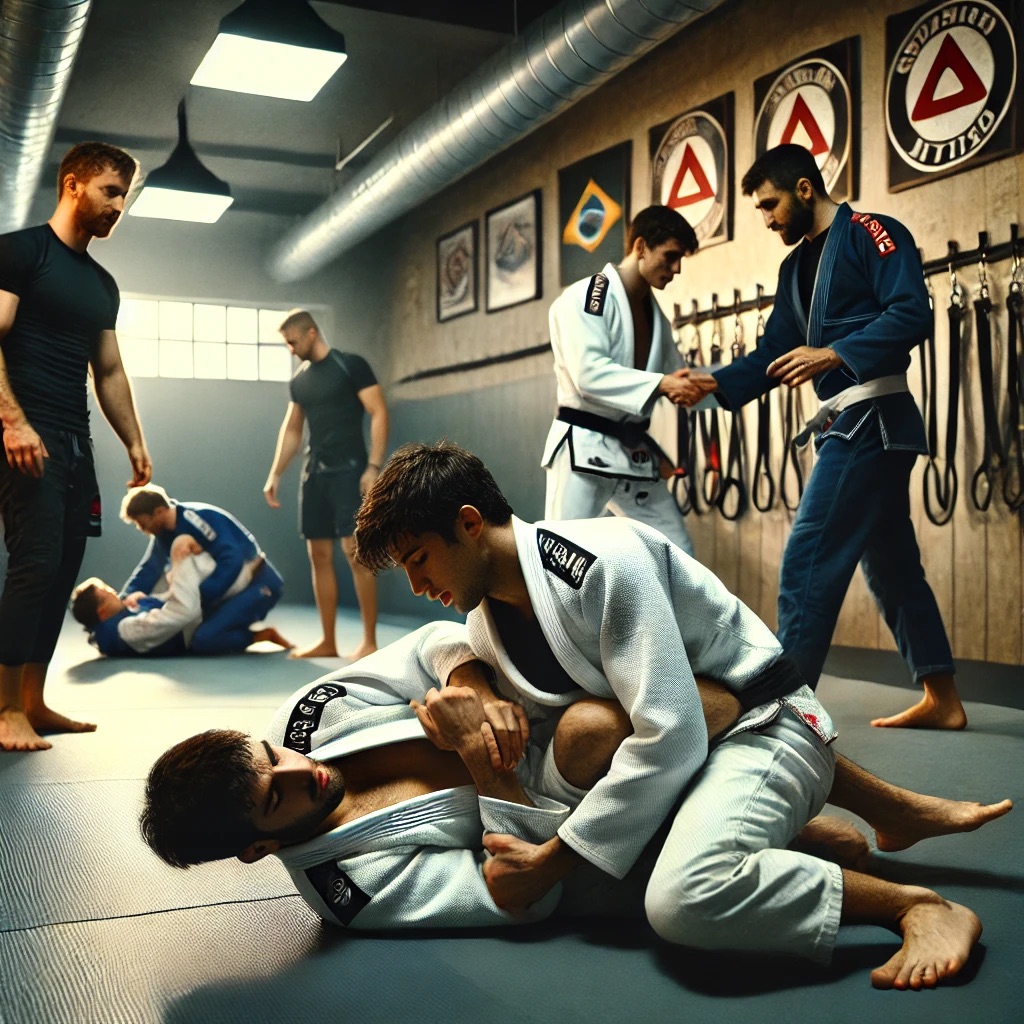
In Brazilian Jiu-Jitsu (BJJ), sparring is at the heart of skill development, whether you’re training for competition or self-defense. However, not all sparring is created equal. Two primary methods—open sparring and positional sparring—offer unique benefits. The key to unlocking these advantages often lies in how you approach each style, who you train with, and the environment created by your instructors. In this post, we’ll compare the two styles, highlight the importance of choosing the right training partner, and discuss why a present and observant instructor is crucial to a successful training session.
Open Sparring: Freedom to Explore and Test
Open sparring allows practitioners to engage in rolling with no pre-determined positions, much like a live match where every technique is available. This freedom creates opportunities to:
• Test your overall game: Since there are no limitations, you can move fluidly through various positions, submissions, and escapes, testing your adaptability. Learn more about the importance of adaptability in BJJ sparring here.
• Experience unpredictability: In open sparring, you encounter a wide variety of techniques and movements, simulating real-world grappling scenarios, which enhances your problem-solving skills on the mat. Find out more about problem-solving techniques in BJJ here.
• Conditioning and endurance: Longer rolls at full intensity push both your cardiovascular limits and mental endurance, helping you stay calm under pressure. For more insights on the mental and physical benefits of BJJ, visit this article.
While open sparring is invaluable, it can also lead to frustration if you consistently end up in disadvantaged positions without knowing how to escape. This is where positional sparring comes in.
Positional Sparring: Focused Improvement on Weak Areas
Positional sparring restricts the starting point to specific scenarios—mount, back control, side control, etc.—forcing you to work within a narrower scope of techniques. The benefits of this method include:
• Targeted skill development: By repeatedly practicing certain positions, you can refine specific techniques and weaknesses in your game. Read about how positional sparring refines techniques here.
• Increased muscle memory: Repetition from these isolated drills accelerates your ability to perform under pressure when a particular position arises during a live roll.
• Confidence building: Positional sparring can build confidence by giving you a structured approach to escaping bad situations or solidifying dominant positions. Learn more about confidence-building through sparring here.
Choosing the Right Training Partners: Saying “No” When Needed
Not all training partners will match your goals or style, and learning when and how to say “no” to certain rolls is a crucial part of personal development. Here’s why:
• Injury prevention: Rolling with someone too aggressive or mismatched in skill level could lead to injury. It’s essential to recognize when a partner’s intensity exceeds your comfort zone and politely decline the roll. For injury prevention tips in BJJ, check this article.
• Tailoring your training focus: If you are working on specific techniques, it makes sense to roll with partners who match your current goals, whether that’s a beginner for flow drills or an advanced practitioner for challenging problem-solving.
• Mental focus: Training with the right partner improves your mental state during practice. You can relax and be present, which leads to more effective learning. Learn more about mental clarity and focus in BJJ here.
The Importance of the Right Environment: Instructors Must Be Observant
An environment where the instructor is not only present but also actively observing the rolls can greatly impact the quality of your training. Here’s why:
• Safety monitoring: An attentive instructor can spot unsafe practices or overly aggressive rolls and intervene to prevent injury.
• Immediate feedback: Instead of waiting until after class to give general advice, instructors who are watching can offer real-time adjustments, improving your game instantly. Read about why feedback during sparring matters here.
• Encouraging balanced growth: Instructors who observe from the outside can better balance the rolls between students, ensuring everyone gets valuable training time without becoming overwhelmed.
Conclusion: Sparring with Intent
Whether you prefer open or positional sparring, the key to progress is intention. By choosing the right partner and training in an environment where the instructor is both present and involved, you’ll not only grow technically but also reduce the risk of burnout or injury. The ultimate goal is to create an atmosphere that fosters development in all aspects—mental, physical, and technical.
Remember, it’s okay to say “no” to certain partners and create boundaries for your own safety and growth. Brazilian Jiu-Jitsu is a personal journey, and controlling who you roll with, combined with the guidance of an observant instructor, ensures that you progress in a healthy and positive way.
SEO Optimization Tips:
• Use Brazilian Jiu-Jitsu and BJJ sparring as primary keywords throughout the text.
• Include open sparring vs. positional sparring as a secondary keyword phrase for backlisting.
• Link to related posts about injury prevention in BJJ, choosing training partners, and the benefits of having a present instructor to optimize internal linking.
Hashtags:
#BrazilianJiuJitsu #BJJTraining #BJJCommunity #MartialArts #BJJTechnique #Sparring #MentalTraining #SelfDefense #PositionalSparring #OpenSparring #TrainingPartners #InjuryPrevention #RollSmart #LiveSparring #BJJGrowth #JiuJitsuLifestyle #BJJInstructor #BJJJourney
 Guardian Mt. Hood Jiu Jitsu
Leave a comment